
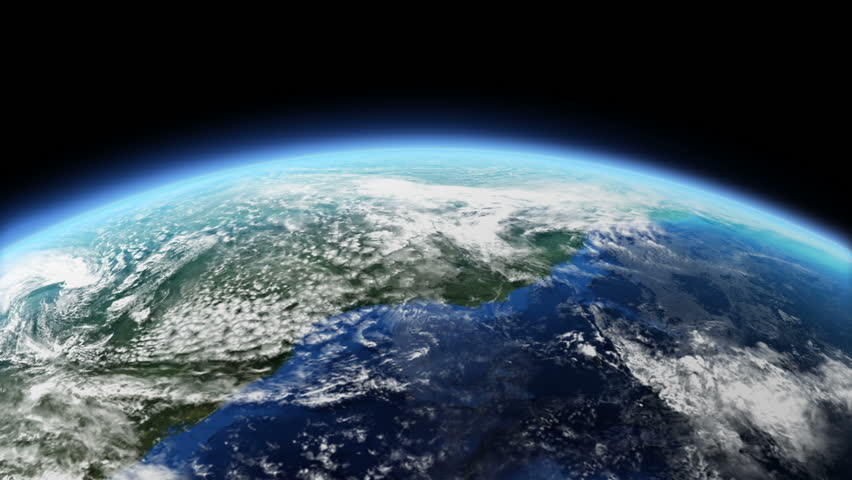
The Earth has existed for around 5 billion years already, and it is expected to last for billions of years more. The Earth is the only planet that has water to drink and air to breath. In other words, Earth is the only planet that could support human life. But humans don’t seem to understand the significance of Earth. Some human practices are harming the environment and are imposing threat to Earth. These includes: burning of fossil fuels, excessive cutting of tress, and the use of appliances that emits CFCs (chlorofluorocarbons).These practices have now created the planet’s biggest problems, namely, climate change and global warming.
In order to fully understand this problem, let us first familiarize the harmful gases that are present in the atmosphere and how they enter it. These gases are widely known as greenhouse gases
- Carbon dioxide (CO2): Carbon dioxide enters the atmosphere through burning fossil fuels (coal, natural gas, and oil), solid waste, trees and wood products, and also as a result of certain chemical reactions (e.g., manufacture of cement). Carbon dioxide is removed from the atmosphere (or “sequestered”) when it is absorbed by plants as part of the biological carbon cycle.According to Biello (2009), to avoid catastrophic climate change, the world will need to release less than one trillion metric tons of carbon between now and 2050.Atmospheric concentrations of carbon dioxide have reached 386 parts per million, and it is continuously rising, because every year, human activity spews more than 30 billion metric tons of CO2 (Carbon Dioxide). So far, that’s led to warming of roughly 0.8 degree Celsius (1.4 degrees Fahrenheit).
- Methane (CH4): Methane is emitted during the production and transport of coal, natural gas, and oil. Methane emissions also result from livestock and other agricultural practices and by the decay of organic waste in municipal solid waste landfills.
- Nitrous oxide (N2O): Nitrous oxide is emitted during agricultural and industrial activities, as well as during combustion of fossil fuels and solid waste.
- Fluorinated gases: Hydrofluorocarbons, perfluorocarbons, sulfur hexafluoride, and nitrogen trifluoride are synthetic, powerful greenhouse gases that are emitted from a variety of industrial processes. Fluorinated gases are sometimes used as substitutes for stratospheric ozone-depleting substances (e.g., chlorofluorocarbons, hydrochlorofluorocarbons, and halons). These gases are typically emitted in smaller quantities, but because they are potent greenhouse gases, they are sometimes referred to as High Global Warming Potential gases (“High GWP gases”).
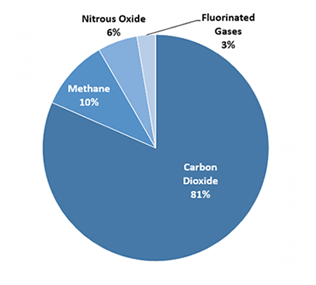
The graph below above shows the greenhouse gas emission in 2016
The following pictures show human practices that have contributed to climate change or global warming.


– Edil Kim L. Alce
References:
https://www.enotes.com/homework-help/earths-present-condition-118313
https://www.epa.gov/ghgemissions/overview-greenhouse-gases
https://www.scientificamerican.com/article/limits-on-greenhouse-gas-emissions/
 Take Action
Nice content, it would be helpfull for the young generations👍
LikeLiked by 1 person
Thank you!
LikeLike
😌😌😌👏👏👏👏👏
LikeLiked by 1 person